
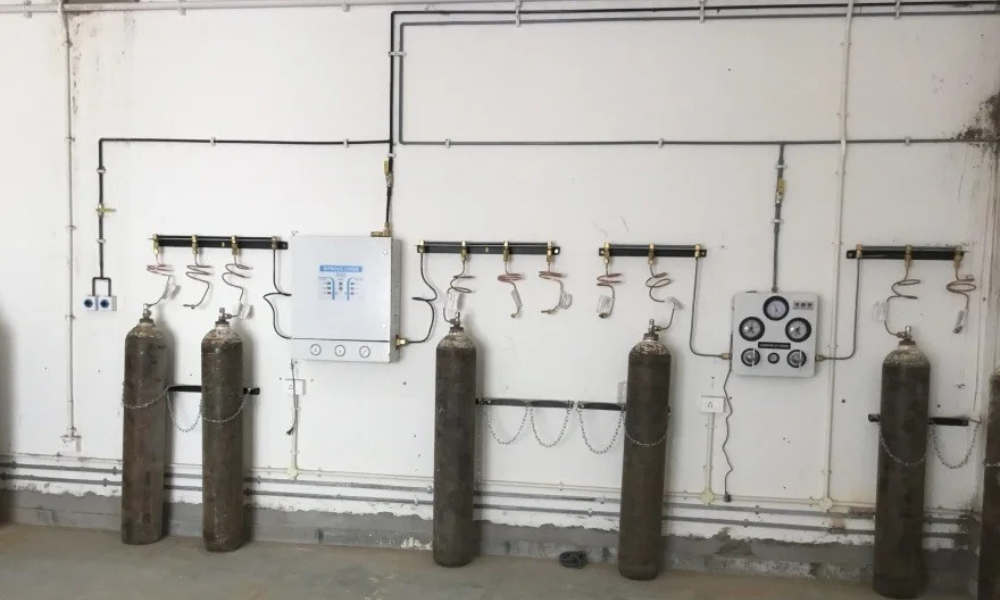
Medical Gas Pipeline Testing and Commissioning
A Medical Gas Pipeline System (MGPS) is one of the most important components of modern hospital infrastructure. It provides a centralized supply of essential medical gases, such as oxygen, medical air and nitrous oxide, along with medical vacuum services where required. These systems support patient care in Intensive Care Units (ICUs), Operation Theatres (OTs), emergency departments, recovery rooms and general wards.
However, installing a medical gas pipeline system is only one part of the process. Before a newly installed or modified system is handed over for clinical use, it must undergo appropriate inspection, testing, verification and commissioning by qualified professionals.
A systematic commissioning process helps identify installation defects, incorrect gas connections, pressure-related problems and alarm system faults before the system is accepted for operation.
In this guide, we explain the key stages of hospital medical gas pipeline system testing and commissioning, the checks to consider before handover, and the documentation that should be reviewed.
What Is Medical Gas Pipeline System Testing and Commissioning?
Medical Gas Pipeline System testing and commissioning is the process of verifying that an installed system has been completed correctly and performs according to its approved design, applicable standards and project specifications.
Testing evaluates the condition and performance of individual components and the pipeline network. Commissioning brings these checks together to verify that the complete system, including its supply sources, distribution network, terminal units, valves and alarms, operates as intended.
The process should be planned around the specific gases and services installed, the hospital’s clinical requirements, the approved project documentation and the applicable technical standards.
Testing and commissioning are particularly important for:
- New hospital construction projects
- New ICU and operation theatre installations
- Hospital expansions and additional patient-care areas
- Medical gas pipeline modifications or extensions
- Replacement of major system components
- Renovation projects involving existing medical gas infrastructure
The precise testing sequence and acceptance criteria depend on the system design and the standards applicable to the project.
Why Is MGPS Testing and Commissioning Important?
Medical gases are directly associated with patient treatment and the operation of critical-care equipment. An incorrectly connected outlet, an undetected leak or a malfunctioning alarm can create serious operational and patient safety risks.
A structured commissioning process helps hospitals:
- Verify that pipelines and components have been installed according to the approved design.
- Identify leakage, pressure irregularities and other installation defects.
- Confirm that each terminal unit supplies the intended gas or service.
- Verify the operation of relevant monitoring and alarm systems.
- Check that isolation arrangements are correctly identified and documented.
- Establish a reliable record of testing, corrective work and final acceptance.
- Prepare the system for controlled handover to the hospital’s facilities and maintenance teams.
Commissioning should not be treated as a formality at the end of construction. It is an essential stage of hospital infrastructure quality assurance.
Complete Medical Gas Pipeline System Testing Checklist
The following checklist provides a general overview of the main areas that should be addressed during MGPS inspection and commissioning. It is not a substitute for the detailed testing procedure required by the applicable standard or the approved project specification.
1. Review Approved Drawings and Installation Documents
Before functional testing begins, the commissioning team should review the approved design and installation records.
The review should cover:
- Medical gas pipeline layout and distribution drawings
- Gas source and supply arrangements
- Pipeline routes and identification
- Area valve service unit locations
- Terminal unit and outlet schedules
- Alarm and monitoring system layouts
- Equipment specifications and installation records
- Previous inspection reports and outstanding defect lists
The installed system should be compared with the approved documentation. Any deviation should be recorded, assessed and resolved through the project’s formal approval process.
2. Inspect Pipeline Installation and Identification
A visual inspection helps identify installation issues that may affect the reliability, accessibility or maintainability of the system.
Important checks include:
- Correct pipeline identification and gas labelling
- Appropriate pipe supports and installation quality
- Accessible and correctly identified isolation valves
- Suitable protection against physical damage
- Correct installation of fittings and connections
- Accessibility for inspection and future maintenance
- Consistency between installed components and approved drawings
Pipeline identification should remain clear and consistent throughout the distribution network. The identification method must follow the applicable standard and the project’s approved requirements.
3. Conduct the Required Pressure and Leakage Tests
Pressure and leakage testing are essential parts of medical gas pipeline verification. These tests help determine whether the installed network meets the required integrity and performance criteria.
Qualified commissioning personnel should verify that:
- The prescribed test procedure has been followed.
- Test equipment is suitable and appropriately calibrated.
- The correct test medium and test conditions have been used.
- The required pressure and test duration match the applicable standard.
- Test results have been recorded accurately.
- Any detected leakage has been investigated and corrected.
- Required tests have been repeated successfully after corrective work.
Medical gas systems must not be tested using improvised procedures. Test pressures, durations and acceptance limits should be established from the applicable standard and approved project requirements rather than assumed from a generic checklist.
4. Verify Gas Identity and Check for Cross-Connections
Gas identity verification is one of the most critical commissioning activities.
Every medical gas outlet must provide the intended gas or service. A cross-connection or incorrect supply can create a serious hazard if an outlet delivers a different gas from the one indicated by its identification.
The commissioning team should verify that:
- Each pipeline is connected to the correct supply source.
- Terminal units are correctly identified for their intended service.
- Gas identity verification is performed using the prescribed method.
- Cross-connection testing is completed according to the applicable standard.
- Results are documented for the relevant pipeline sections and outlets.
- Any discrepancy is corrected and successfully retested.
Colour coding and labels alone are not sufficient to establish that a pipeline contains the correct gas. Appropriate verification must be completed before clinical use.
5. Check Medical Gas Terminal Units and Outlets
Medical gas outlets are the connection points used by clinical staff to access the required gas or vacuum service.
Each terminal unit should be checked according to its design and the applicable testing requirements.
The inspection should consider:
- Correct gas or service identification
- Compatibility with the intended medical equipment connection
- Secure mounting and installation
- Appropriate connection and disconnection function
- Correct operation of the terminal unit’s safety features
- Leakage and performance checks required by the relevant standard
- Clear access for clinical use and maintenance
Outlet verification should cover the installed locations, including patient bedsides, ICU stations, recovery areas and operating theatres.
6. Verify Operating Pressure and Flow Performance
A medical gas pipeline system must deliver the required service under the operating conditions specified for the facility.
Pressure and flow verification should consider the design requirements, the installed equipment and the anticipated demand of the connected clinical areas.
The commissioning team should check:
- Pressure at the designated test points
- Performance under the prescribed test conditions
- Relevant pressure-regulating equipment
- Supply performance at representative or specified terminal units
- Pressure stability under the required demand conditions
- Any abnormal fluctuations or performance deviations
- Compliance with the approved acceptance criteria
Testing should account for the system configuration and the simultaneous demand expected in the areas being served. Results should be compared with the applicable technical requirements, not with arbitrary universal pressure or flow values.
7. Test Area Valve Service Units and Isolation Arrangements
Area valve service units allow designated sections of the medical gas distribution network to be isolated when required.
Correct identification and functional verification are essential for maintenance planning and emergency response.
The commissioning checklist should include:
- Verification of valve location and accessibility
- Confirmation of gas or service identification
- Comparison with the approved valve schedule
- Checks of valve operation according to the approved procedure
- Verification of the areas served by each valve
- Review of labels and associated documentation
- Confirmation that isolation arrangements are clearly recorded
Isolation testing must be carefully planned. Unauthorised valve operation can interrupt essential medical gas supplies, so testing should be coordinated with the hospital team and performed by authorised personnel under controlled conditions.
8. Check Medical Gas Alarm and Monitoring Systems
Alarm systems help alert hospital personnel to abnormal conditions affecting the medical gas supply.
Depending on the installation, the system may include source alarms, master alarms and area alarms. The exact configuration depends on the project design and applicable requirements.
Commissioning checks should verify:
- Correct installation and identification of alarm panels
- Relevant high-pressure and low-pressure alarm functions
- Appropriate supply-source and equipment fault indications
- Audible and visual alarm operation
- Correct sensor response to prescribed test conditions
- Transmission of alarms to the designated monitoring locations
- Restoration of normal indications after testing
- Recording of test results and any corrective action
The purpose is to verify the complete alarm response, not merely confirm that a panel has electrical power.
Alarm testing should be performed using approved simulation or testing procedures that do not put patient care or the live gas supply at risk.
9. Verify Gas Supply Sources and Changeover Arrangements
The medical gas source equipment must support the intended distribution system.
Depending on the hospital’s configuration, this may include cylinder manifolds, bulk supply systems, medical air plant, vacuum plant, regulators and automatic changeover equipment.
The commissioning team should verify the relevant items, including:
- Correct source identification and connections
- Equipment installation against approved specifications
- Required operating pressure and supply performance
- Regulator operation
- Automatic changeover functions, where installed
- Relevant source and fault alarms
- Backup supply arrangements, where applicable
- Availability of operating and maintenance documentation
Supply-source testing should be coordinated with the pipeline commissioning plan so that the complete system is assessed safely and consistently.
10. Review Electrical and Control Interfaces
Some medical gas installations include electrically powered monitoring, control and alarm equipment.
Where applicable, the commissioning process should include checks of electrical connections, power supply arrangements, control functions and relevant interfaces.
The review should confirm that the installed equipment matches the approved specifications and that its required functions operate correctly. Electrical safety and any backup power arrangements should be verified by appropriately qualified personnel using the applicable procedures.
Medical Gas Pipeline System Handover Checklist
After testing and commissioning, the project team should prepare a handover package for review by the hospital’s authorised representatives.
Use this summary checklist to track the major deliverables.
| Handover item | What to verify |
|---|---|
| Approved drawings | Final installed layout and relevant revisions |
| Installation inspection | Recorded inspection findings and corrective actions |
| Pressure and leakage tests | Completed reports with recorded results |
| Gas identity verification | Evidence of correct gas delivery and cross-connection checks |
| Terminal unit testing | Functional and identification test records |
| Pressure and flow verification | Results against approved acceptance criteria |
| Valve schedule | Locations, identification and areas served |
| Alarm testing | Functional test records and fault resolution |
| Source equipment checks | Relevant source, regulator and changeover verification |
| Equipment documentation | Applicable manuals, specifications and maintenance instructions |
| Defect register | Outstanding issues, resolutions and retest results |
| Staff orientation | Operating and emergency procedures explained to designated staff |
| Final acceptance | Formal review and sign-off by authorised parties |
The exact handover requirements depend on the contract, project scope, applicable standards and hospital procedures.
Any unresolved safety-critical defect should be assessed and addressed before the affected system is accepted for clinical use. Handover documentation should clearly state the scope of testing completed and any formally approved limitations.
Common Mistakes to Avoid During MGPS Commissioning
Even a well-installed medical gas pipeline system can face acceptance delays when essential checks or records are overlooked.
Incomplete Testing Records
A test that has been performed but not properly documented can create difficulties during technical review, audits and future maintenance. Keep complete and traceable records of the required tests and their results.
Relying Only on Visual Inspection
Correct labels and neat installation do not prove that a pipeline is leak-free, delivers the correct gas or meets performance requirements. Appropriate technical testing is essential.
Skipping Gas Identity Verification
Assuming that the gas is correct because the pipeline is labelled can leave a serious hazard undetected. Gas identity and cross-connection checks must follow the prescribed commissioning procedure.
Ignoring Alarm Functions
An alarm panel may appear operational while a sensor, signal or remote indication is not functioning as intended. Test the relevant alarm sequence and record the results.
Failing to Retest After Repairs
When a defect is corrected, the affected part of the system should undergo the appropriate repeat tests. Corrective work should be documented, including the final verification result.
Starting Clinical Use Before Formal Acceptance
The system should not be released for patient care simply because installation work is complete. Required testing, defect resolution, documentation and formal acceptance must be completed in accordance with the applicable requirements.
Which Standards Apply to Medical Gas Pipeline Testing?
Medical gas pipeline systems must be designed, installed, tested and commissioned according to the standards and regulations applicable to the project.
Depending on the jurisdiction and project specification, relevant references may include:
- ISO 7396-1: Medical gas pipeline systems for compressed medical gases and vacuum.
- HTM 02-01: Guidance for medical gas pipeline systems in healthcare facilities in the United Kingdom.
- NFPA 99: Health care facilities code, including provisions relevant to healthcare gas and vacuum systems.
- Applicable Indian regulations and project specifications: Requirements established by the relevant authorities, approved design documents and contractual obligations.
These references are not interchangeable in every situation. The project team must determine which requirements apply to the hospital, follow the adopted edition and confirm any required inspection, verification or certification arrangements.
A general online checklist should never replace the detailed testing procedure specified by the applicable standard.
How Technomed Supports Hospital Infrastructure Projects
Technomed Instruments and Equipments Sales Pvt. Ltd. provides hospital infrastructure solutions, including Medical Gas Pipeline Systems, Modular Operation Theatres, Modular ICUs and other critical-care infrastructure.
For healthcare facilities planning a new project or upgrading an existing system, coordinating design, equipment selection, installation and technical documentation helps support an organised project handover.
Hospitals should work with suitably qualified professionals to establish the commissioning plan, carry out the required verification activities and confirm that the completed installation meets the applicable project requirements.
To learn more about Technomed’s hospital infrastructure solutions, visit the Medical Gas Pipeline System section or explore the Technomed website.
Conclusion
Testing and commissioning are essential stages in the delivery of a Medical Gas Pipeline System. They help verify pipeline integrity, correct gas identity, terminal unit performance, pressure and flow conditions, valve arrangements, supply-source operation and alarm functionality.
A structured pre-handover checklist also helps the project team identify outstanding defects, organise technical records and prepare the documentation required for formal acceptance.
For hospitals, the objective is not simply to complete installation work. It is to establish that the medical gas infrastructure has been appropriately tested, documented and accepted before it is placed into clinical service.
Planning a new hospital, ICU or operation theatre? Explore Technomed’s hospital infrastructure solutions to discuss your medical gas pipeline and related infrastructure requirements.